




Fleet Insurance Rising? Prove You're a Good Risk | LANA
Fleet Insurance Costs Are Rising. Can You Prove You're a Good Risk?
If your fleet's insurance bill keeps climbing no matter how clean your record is, you're not the only one asking why. Commercial trucking insurance costs per mile hit a record 10.2 cents per mile in 2024, and cumulative costs per mile are up an estimated 43% since 2019 (Truck Writers; Commercial Carrier Journal). What makes it sting even more is that these increases have kept coming even as safety has gotten better industrywide — injury crash rates are down 15.3% and fatal crash rates are down 13.9% compared to 2019.
LANA Fleet - Dual Facing Dash Camera To The Video: OcuCam catching a severe braking event in real time.
Fleet Operations Come Down to One Question
In fleet management, the difference between profit and loss often comes down to a single question when something goes wrong: can you prove what happened? Much of the current hard insurance market has less to do with your own driving record and more to do with forces outside your control — litigation costs, sustained insurer losses, and industrywide claim trends can push rates up even in a completely clean year (Marshall+Sterling).
What insurers are paying closer attention to now is documentation. Fleets that can show an active, ongoing safety program — not just a camera mounted on the windshield — are the ones best positioned heading into renewal season.
What the Numbers Actually Say

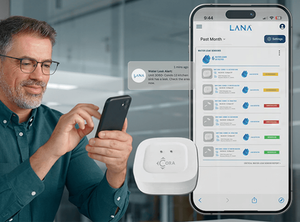
Harsh turn events flagged instantly in the LANA Go mobile app.
A few figures worth sitting with:
- According to FMCSA's official crash cost data, the average injury crash involving a large truck costs $326,810 in 2023 dollars — a number that makes the case for prevention on its own (FMCSA).
- Smaller fleets feel it hardest — carriers with 5 to 25 trucks paid more than 20 cents per mile in 2024, roughly double what larger fleets averaged, largely because insurers have less safety-record data to price against (Commercial Carrier Journal).
- Fleets using dash cams and telematics to document driver behavior are repeatedly cited as the ones best positioned to reduce claims and negotiate better terms (Transport Topics).
The pattern holds up: it's not the fleets with the most cameras cutting their costs, it's the fleets with the smartest ones — and the data to back it up.
A Camera Alone Isn't a Safety Program
Recording footage and hoping you never need it isn't a strategy anymore — it's a habit that's starting to cost fleets real money at renewal. The shift happening across fleet management right now is from reacting after an incident to proving prevention before one, with data your insurer can actually see.
Where OcuCam Comes In
OcuCam is built for exactly this shift. It's enterprise-grade visual AI for fleet operators, logistics companies, and commercial vehicle managers who understand that visibility equals liability control, operational excellence, and driver protection. Instead of hours of raw footage that only matters after something goes wrong, OcuCam turns everyday driving into a risk mitigation infrastructure — reducing insurance exposure, resolving disputes instantly, and converting video into business intelligence.
One fleet manager put it simply: using OcuCam and the LANA platform cut incident investigation time by 80%. Instead of chasing down footage and interviewing drivers for hours, the truth is available in five minutes. Another customer avoided a $45,000 property damage claim entirely — footage proved their vehicle was never even on the street in question.
Real-time GPS tracking, in-cab audio alerts for driver coaching, and 3-level risk detection mean OcuCam isn't just recording your fleet — it's actively helping you manage risk before it turns into a claim.
Stop Hoping You're a Good Risk. Start Proving It.
See how OcuCam gives your fleet the visibility, documentation, and AI-powered safety data insurers are paying closer attention to.
Shop OcuCam Now →Frequently Asked Questions
Can a dash cam actually help with insurance costs?
There's no single guaranteed discount, but dash cams, telematics sharing, and stricter distracted-driving enforcement are consistently cited across the trucking industry as tools that help fleets reduce claims and negotiate better terms at renewal.
Why do insurance premiums keep rising even when my fleet has a clean record?
A lot of it is outside any single fleet's control. Nuclear litigation verdicts, rising claim payouts, and market-wide loss trends have pushed rates up across the industry, sometimes independent of an individual fleet's own safety record.
What's the difference between a basic dash cam and an AI dash cam?
A basic dash cam just records footage for someone to dig through after something happens. An AI dash cam like OcuCam actively flags events such as harsh braking or distracted driving in real time, and turns that into data you can use for coaching and documentation.
How fast can OcuCam resolve a liability dispute?
Instead of spending hours chasing down footage and interviewing drivers, fleets using OcuCam and the LANA platform can often pull up exactly what happened within minutes, turning what used to be a lengthy investigation into a quick, evidence-backed resolution.
Ready to See What OcuCam Can Do for Your Fleet?
Join the fleets already using OcuCam to cut investigation time, resolve disputes fast, and build a documented safety record insurers notice.
Shop OcuCam Now →