



Dash Cam Footage as Legal Evidence | Fleet Guide
Fleet Managers
Dash Cam Footage as Legal Evidence: What Fleet Managers Need to Know
When an accident lands your fleet in a courtroom, raw video isn't enough. Learn what actually makes dash cam footage hold up as evidence — and why the software behind the camera matters as much as the lens.
A collision involving one of your vehicles can turn into a legal case in a matter of hours. Attorneys move fast, insurance adjusters move faster, and the difference between a quick resolution and a costly, drawn-out claim often comes down to one thing: whether you have clear, verifiable footage of what actually happened.
Most fleet managers know a dash cam records video. Fewer know what separates footage that protects a company in court from footage that gets thrown out, disputed, or never found in time. It isn't just about having a camera pointed at the road — it's about the system behind it.
Why Video Alone Isn't "Evidence" Yet
Courts and insurance investigators don't just want to see what happened — they need to trust that the footage is authentic, unaltered, and tied to a verifiable time and place. That trust is built through what's called a chain of custody: a documented, unbroken trail showing exactly how footage was captured, stored, and retrieved.
A camera that saves clips to a loose SD card, with no timestamp verification, no location data, and no secure retrieval process, creates gaps in that chain. Gaps invite doubt. And doubt is exactly what the opposing side's legal team is looking for.
The takeaway: footage is only as useful as the system that proves it's real. That's a software problem as much as a hardware one.
From Road to Courtroom: How Footage Becomes Evidence
Here's what a defensible evidence trail actually looks like with a connected fleet camera system like OcuCam, running on the LANA platform:
Event Occurs
Hard brake, impact, or incident triggers recordingAI Flags It
OcuCam auto-tags the clip as a critical eventCloud Sync
Footage uploads securely to the LANA platformGPS + Time Tag
Location, speed, and timestamp locked to the clipSecure Export
Verified footage ready for legal or insurance reviewEach step matters. Skip any one of them and you're left with a video file that's easy to challenge — or worse, one you can't find at all when a claim surfaces weeks later.
Where the Software Does the Heavy Lifting
The camera captures the moment. The platform is what makes that moment usable in a legal setting. This is the part most fleets underestimate — and it's where LANA is built differently.
Automatic Event Detection
AI onboard OcuCam identifies hard braking, collisions, and near-misses in real time, flagging the exact clip you need instead of hours of footage to scrub through.
Tamper-Resistant Cloud Storage
Footage syncs off the device automatically, removing the risk of a lost, damaged, or "misplaced" SD card after an incident.
GPS-Synced Timestamps
Every clip is locked to precise location and speed data, corroborating the video with hard telemetry an attorney can't easily dispute.
Instant Retrieval
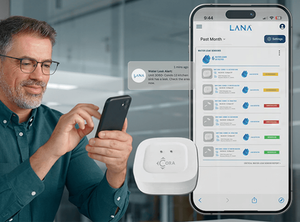
Search by date, driver, or vehicle from the LANA dashboard in minutes — not by driving out to physically pull a camera off a truck.
Controlled Access Logs
The platform records who viewed or exported footage and when, reinforcing the chain of custody if authenticity is ever questioned.
Driver Behavior History
Beyond a single incident, LANA's scoring and coaching data can demonstrate a pattern of safe driving practices across your fleet.
Protecting Against Fraudulent Claims
Nuclear verdicts and staged-accident schemes have made commercial fleets a target. Dual-facing footage that shows both the road and the cab gives your legal team a full picture — not just what the other driver did, but proof of your own driver's behavior in the moments before and after.
Paired with GPS speed data and AI event tagging, that footage becomes far harder to dismiss as circumstantial. It shifts a "he said, she said" dispute into a documented, time-stamped account.
What to Look for in a Fleet Camera System
- Automatic, redundant storage — footage shouldn't depend on a driver remembering to save it.
-
Verifiable metadata — GPS, speed, and timestamp data tied directly to the clip.

- Fast, centralized retrieval — a dashboard your team (or legal counsel) can search without touching a vehicle.
- Audit trail on access — a record of who pulled footage, and when.
- Reliable hardware — dual-facing HD video that holds up to scrutiny, in all conditions.
A dash camera is the sensor. The platform behind it is what turns raw video into something your insurance company, your attorney, and a courtroom will actually trust.
Protect Your Fleet Before You Need To
OcuCam pairs dual-facing AI video with the LANA platform's automatic cloud sync, GPS tagging, and instant retrieval — so when an incident happens, your evidence is already ready.
Shop OcuCam Fleet Dashcam